Char Dham Yatra
ABOUT CHAR DHAM
Char Dham is not a path on a map but one written on the soul, reached not by distance alone but by letting go, where each upward step peels away the noise of the world until only breath, faith, and sky remain.
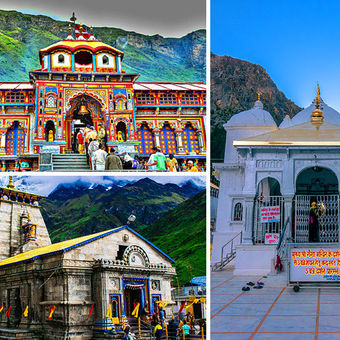
Yamunotri is where silence learns to flow, snow cradling the first pure heartbeat of the Yamuna as the mountains lean in like guardians of a secret meant for those who walk slowly, and when you dip your hands into her waters, time loosens its grip and memories wash lighter, cleaner, new. Gangotri rises like an ancient hymn, where the Ganga is born not in haste but in grace, a silver ribbon of devotion unspooling from ice and stone, while the wind chants stories of sages and stars and the river carries centuries of tireless prayers, flowing without question. Kedarnath stands where words fall quiet, a stone temple breathing beneath an endless sky, surrounded by mountains older than belief, where the air is thin, the silence vast, and yet the heart beats louder than ever, teaching that surrender is strength and the soul can kneel without being told. Badrinath arrives like a blessing after longing, bright and forgiving against the stern Himalayas, with the Alaknanda singing softly and the mountains no longer distant but watchful witnesses, where peace does not descend but settles gently and permanently. Char Dham does not promise comfort; it promises truth, emptying you before it fills you and breaking you before it blesses you, and though the journey aches and the climb humbles, the return carries a different light in your eyes. Come with burdens and the mountains will take them, come with prayers and the wind will remember them, and if you come with an open heart, Char Dham will remain long after your footsteps fade—this is not a pilgrimage you finish, but a place where the soul dissolves into the divine and learns how to be still.
HISTORY OF CHAR DHAM
The history of Char Dham is not carved in stone alone; it is carried by rivers, guarded by mountains, and whispered through centuries of prayer Reaching back to a time before pilgrims walked with folded hands or temples rose against the sky, when the Himalayas themselves stood in deep meditation and revealed these sacred lands to sages who listened more than they spoke. Yamunotri was first known to silence, where ancient rishis were drawn by the quiet power of snow and fire, believing the Yamuna cleansed not only the body but eased the passage beyond life, and here history was born as devotion that slowly became tradition. Gangotri was never merely the birthplace of a river but the answer to King Bhagiratha’s penance, whose prayers brought the Ganga down from the heavens to liberate his ancestors, her fall softened by the mountains as history began to flow forward—clear, relentless, eternal. Kedarnath rose from the weight of repentance after the Mahabharata, when the Pandavas sought forgiveness and Lord Shiva, hidden among the peaks, revealed himself through endurance rather than comfort, the temple standing as a testament that faith must be earned and truth often waits where the path is hardest. Badrinath carries the calm of ancient wisdom, where Lord Vishnu is believed to have meditated while Goddess Lakshmi sheltered him as a Badri tree, and where Adi Shankaracharya later rediscovered the sacred ground to remind the world of forgotten knowledge that rested quietly beside the Alaknanda. Through centuries of rising and falling kingdoms, shifting borders, and changing histories, Char Dham remained untouched by conquest, chosen by pilgrims walking barefoot where armies could not march, as the Himalayas upheld faith over power and silence over glory. In the 8th century, Adi Shankaracharya wove these four abodes into a single sacred journey—not as a route, but as a cycle of purification, devotion, surrender, and peace—making Char Dham a mirror of life itself. Char Dham does not announce its past; it invites you to walk through it, to feel history in aching legs, thinning air, and sudden stillness, where the past has never left but breathes in the wind, flows in the rivers, and waits patiently for every soul willing to climb closer to the divine, a history written not in years but in faith that has never stopped walking.
GEOGRAPHY OF CHAR DHAM: WHERE IS IT LOCATED ?
Char Dham rests where the earth rises to meet the divine, high in the Garhwal Himalayas of Uttarakhand, where four sacred abodes lie scattered like quiet stars across a landscape shaped by ice, rivers, and time, a terrain that is not gentle but humbling in its power. Yamunotri lies hidden in the western folds near the icy crown of Bandarpoonch, and at nearly 3,300 meters the land narrows, the air thins, and mountains draw close as glaciers sleep beneath rock and snow while hot springs rise beside frozen paths, fire and ice coexisting as the Yamuna begins her journey not in force but in intimacy, as if whispered into motion by the peaks. Further east, Gangotri rests along the Bhagirathi River, which cuts a silver line through deep valleys of stone and pine, and at around 3,100 meters the land feels open yet immense, with wide skies, long shadows, and a silence broken only by the presence of the Gangotri Glacier, a frozen river of time reminding that the geography here is still alive and becoming. Kedarnath stands apart, isolated and raw at over 3,500 meters, set within a glacial basin carved by ancient ice and surrounded by towering peaks that feel impossibly close, where the Mandakini flows cold and restless and the land, marked by steep slopes, scattered boulders, and sudden weather shifts, does not welcome easily but waits to test worthiness. Badrinath, by contrast, settles gently between mountains along the banks of the Alaknanda, and at about 3,100 meters the valley widens, colors soften, and the land feels warmer and more human, protected by Nar and Narayan rising on either side as the river flows with calm assurance and the geography itself breathes peace. Together, these four dhams trace a sacred arc across glaciers, valleys, rivers, and ridges, lying within one region yet feeling like four distinct worlds shaped by altitude, climate, and silence, where roads cling to mountainsides, paths follow rivers like prayers, and distance is measured not in kilometers but in patience and wonder. Char Dham is not placed gently upon the land but carved into it, woven through snowfields and stone and balanced between sky and earth, existing not only in Uttarakhand or the Himalayas but within a geography that teaches how small one is and how vast faith can feel when the land itself leads you upward.
MUST VISIT PLACES IN CHAR DHAM
Yamunotri Temple
Nestled in the quiet embrace of the Garhwal Himalayas, Yamunotri marks the sacred origin of the Yamuna River. Surrounded by snow, hot springs, and raw mountain silence, this place feels like nature itself is offering prayers alongside you.
Surya Kund
A natural hot water spring near Yamunotri Temple, Surya Kund boils with divine energy. Pilgrims cook rice and potatoes here as offerings, watching faith rise with the steam against the cold mountain air.
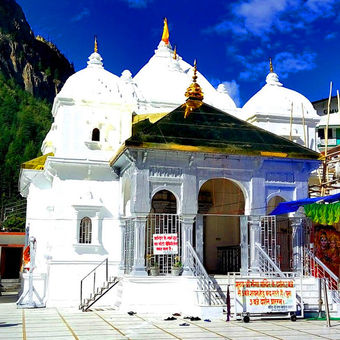
Gangotri Temple
Standing gracefully on the banks of the Bhagirathi River, Gangotri is where the holy Ganga begins her earthly journey. The sound of flowing water, chanting prayers, and icy winds creates a moment that stays etched in the heart forever.
Gaumukh Glacier
The true source of the Ganga, Gaumukh is a powerful sight where ice melts into life. Trekking here feels like walking through devotion, silence, and sheer natural wonder.
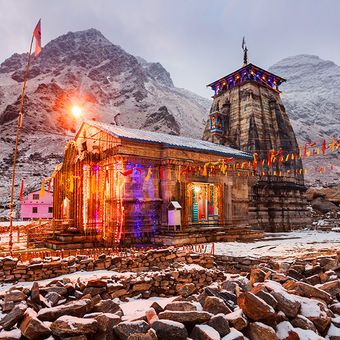
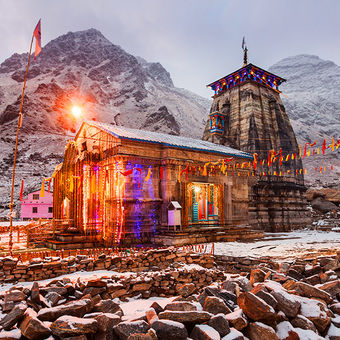
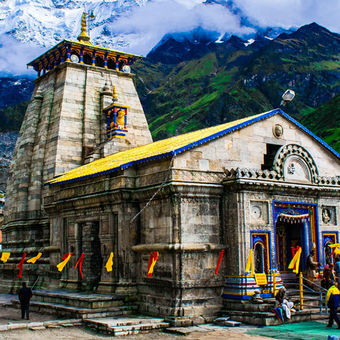
Kedarnath Temple
Resting against dramatic snow-covered peaks, Kedarnath feels timeless and deeply spiritual. The ancient stone temple, misty surroundings, and echoing chants make it one of the most emotionally moving places in the Himalayas.
Bhairavnath Temple
Overlooking Kedarnath from above, this temple is believed to protect the sacred land during winter. The panoramic views and spiritual aura make it a place of strength and calm.
Vasuki Tal
A high-altitude glacial lake near Kedarnath, Vasuki Tal reflects the sky like a mirror. Surrounded by rugged mountains, it feels untouched, silent, and deeply meditative.
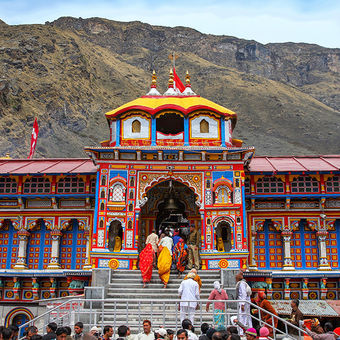
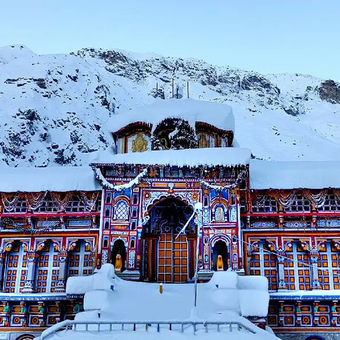
Badrinath Temple
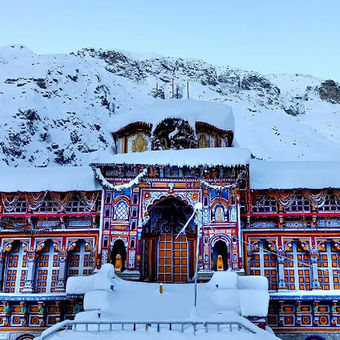
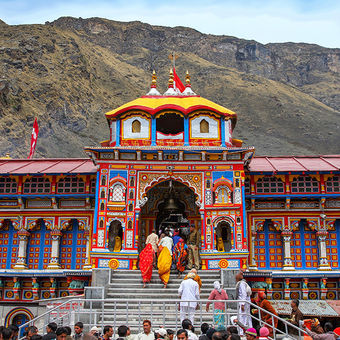
Colorful, vibrant, and divine, Badrinath sits peacefully between the Nar and Narayan mountains. The temple, along with the flowing Alaknanda River, fills the soul with warmth and devotion.
Tapt Kund
A natural hot spring near Badrinath, Tapt Kund is where pilgrims bathe before temple darshan. The warmth of the water against the cold mountain air feels like nature’s blessing.
Mana Village
Known as the last village of India, Mana is steeped in mythology and quiet beauty. Stone houses, flowing streams, and ancient stories make this place feel like a living chapter of history.
WHAT IS THE BEST TIME TO VISIT CHAR DHAM
May to June (Summer)
Pleasant weather, clear roads, and ideal conditions for pilgrimage.
September to October (Autumn)
Fewer crowds, crisp air, and breathtaking mountain views before winter sets in.
CUISINE OF CHAR DHAM YOU MUST HAVE
Garhwali Thali
A simple yet soulful plate that reflects the purity of the Himalayas. Made with local grains, seasonal vegetables, and slow-cooked lentils, every bite feels grounding—like the mountains feeding your spirit.
Mandua Ki Roti (Finger Millet Bread)
Earthy, nutty, and deeply nourishing, this traditional bread is made from mandua flour. Best enjoyed hot with ghee or local curries, it carries the taste of Uttarakhand’s soil and strength.
Chainsoo
A rich lentil dish made from roasted black gram, Chainsoo has a deep, smoky flavor. Thick, aromatic, and comforting, it warms you from within—perfect after a long mountain walk.
Kafuli
Kafuli is Uttarakhand’s pride, made with spinach or fenugreek leaves cooked slowly with local spices. Light yet flavorful, it tastes like fresh mountain air blended into food.
Aloo Ke Gutke
Simple potatoes tossed with mustard seeds, red chilies, and local spices. Crispy on the outside and soft inside, this dish is humble yet unforgettable, often served with mandua roti.
Jhangora Ki Kheer
A delicate dessert made from barnyard millet, milk, and dry fruits. Soft, mildly sweet, and comforting, it feels like a gentle blessing at the end of a sacred meal.
Phaanu
Prepared from a mix of lentils soaked overnight and cooked slowly, Phaanu is thick, wholesome, and deeply satisfying. It’s food that doesn’t rush—just like life in the mountains.
Singori
A traditional sweet wrapped in fragrant malu leaves, Singori carries a subtle aroma and soft texture. One bite and you taste tradition, forests, and celebration together.
Bal Mithai
A famous Himalayan sweet made from roasted khoya and coated with sugar balls. Rich, crumbly, and nostalgic, it melts slowly, leaving warmth behind.
Jalebi & Rabri (Temple Style)
Crispy golden jalebis dipped in sugar syrup, often paired with thick rabri. Enjoyed near temples, this combination tastes extra special after darshan.
Herbal Mountain Tea
Made with local herbs, tulsi, and sometimes rhododendron flowers, this tea is light, fragrant, and healing. One sip feels like the mountains whispering calm into your soul.
HOW TO REACH CHAR DHAM
By Air — Fastest Way to Touch the Himalayas Fly to Dehradun (Jolly Grant Airport)
Nearest airport for Char Dham: Jolly Grant Airport (DED), Dehradun.
Well-connected with major Indian cities like Delhi, Mumbai, Bengaluru, and Hyderabad.
Distance from Dehradun to Char Dham Routes:
Yamunotri / Gangotri / Kedarnath / Badrinath routes begin from Dehradun, Rishikesh, or Haridwar.
Travel Time by Road from Dehradun:
Yamunotri: ~6–7 hours
Gangotri: ~8–9 hours
Kedarnath (till Gaurikund): ~9–10 hours
Badrinath: ~10–11 hours
Options:
Private taxi — most comfortable and flexible.
Shared taxi — budget-friendly and commonly used.
State buses — economical but slower.
By Train — A Journey That Slowly Builds Devotion
Nearest Railway Stations: Haridwar Railway Station, Rishikesh Railway Station, Dehradun Railway Station
These stations are well-connected to Delhi and major cities across India.
From the railway station you can:
Hire a taxi directly toward your chosen Dham.
Take Uttarakhand Roadways buses to towns like Barkot, Uttarkashi, Guptkashi, or Joshimath.
Approximate Road Travel Time:
Haridwar/Rishikesh to Char Dham routes: 8–12 hours depending on destination and road conditions.
By Road — The Most Soulful Way
Road travel is the heart of the Char Dham journey, where every turn reveals rivers, forests, and silent mountains.
Major Starting Points: Haridwar, Rishikesh, Dehradun
Common Routes:
Haridwar → Barkot → Yamunotri
Haridwar → Uttarkashi → Gangotri
Haridwar → Guptkashi → Gaurikund → Kedarnath (trek starts from Gaurikund)
Haridwar → Joshimath → Badrinath
Transport Choices:
State buses (UTC) — affordable and reliable.
Private taxis / shared jeeps — faster and more convenient.
Self-drive — only for experienced mountain drivers.
Special Note: Reaching Kedarnath
Road travel is possible only till Gaurikund.
From Gaurikund, you must:
Trek ~16 km to Kedarnath, or
Use pony, palki, or helicopter services (available from nearby helipads).
Road Travel Tips
Start early in the morning to avoid landslides and traffic.
Always check weather and road conditions in advance.
Carry warm clothes even in summer — weather changes fast.
Mobile networks may be limited in remote areas.
Drive slow, respect the mountains, and enjoy the journey.
Do’s & Don’ts in Char Dham That You Must Be Aware Of!
Do’s in Char Dham
. Respect the Sacred Environment
• Treat Char Dham as a spiritual land, not just a tourist spot.
• Keep the surroundings clean—carry your waste back with you.
• Use dustbins and avoid throwing anything into rivers or valleys.
. Dress Modestly & Comfortably
• Wear modest clothing, especially while visiting temples.
• Carry warm layers—weather can turn cold even during summer days.
• Comfortable walking shoes are a must for uneven paths and treks.
. Follow Temple Rules & Rituals
• Follow queue systems and instructions given by temple authorities.
• Maintain silence and patience during darshan.
• Respect religious customs even if they differ from your own beliefs.
. Register for Char Dham Yatra
• Complete the mandatory Char Dham Yatra registration before starting.
• Carry a printout or digital copy of your registration confirmation.
• Keep your ID proof handy at all times.
. Use Authorized Transport & Guides
• Hire registered taxis, guides, ponies, and palki services only.
• For Kedarnath, always follow official trekking routes and timings.
• Trust local advice—they know the mountains best.
. Check Weather & Road Conditions Daily
• Weather changes rapidly in the Himalayas.
• Check road status, landslide alerts, and temple opening times regularly.
• Always keep a buffer day in your itinerary.
. Start Your Journey Early
• Begin road travel early in the morning to avoid traffic and bad weather.
• Early starts also give clearer views and a peaceful darshan experience.
Don’ts in Char Dham
Don’t Litter or Use Plastic
• Avoid single-use plastics completely.
• Plastic bags and bottles are banned in many areas.
• Protect the fragile Himalayan ecosystem.
Don’t Rush the Yatra
• Char Dham is not a race—take time to rest and acclimatize.
• Avoid overexertion, especially at high altitudes like Kedarnath and Badrinath.
Don’t Ignore Health Precautions
• If you have breathing, heart, or blood pressure issues, consult a doctor first.
• Carry basic medicines and stay hydrated.
• Don’t ignore symptoms of altitude sickness.
Don’t Click Photos Where Restricted
• Photography is prohibited inside temples and near sensitive areas.
• Avoid clicking pictures near army camps and checkpoints.
Don’t Travel Late at Night
• Mountain roads are narrow and risky after sunset.
• Landslides and low visibility make night travel unsafe.
. Don’t Disrespect Local Culture
• Avoid loud music, alcohol, or inappropriate behavior.
• Do not mock or question religious practices.
• Be kind and patient with locals and fellow pilgrims.
Don’t Feed or Disturb Animals
• Avoid feeding monkeys or stray animals near temples.
• Do not disturb wildlife or natural habitats.
Final Travel Tip
Char Dham is not just about reaching four temples—it’s about discipline, devotion, and harmony with nature. When you travel with respect and awareness, the journey becomes smoother, safer, and deeply meaningful. Walk gently, travel mindfully, and let the mountains guide you.
Popular Char Dham Yatra Tour Packages
| Popular Tour Packages | Night/Day | Price |
| Char Dham yatra from Delhi | 11Night / 12Days | Rs. 30000 |
| Amarnath yatra 5 Nights by Helicopter | 5Night / 6Days | Rs. 36000 |
| Char Dham yatra by Helicopter | 2Night / 3Days | Rs. 130000 |
| Char Dham yatra via Haridwar | 9Night / 10Days | Rs. 28000 |
| Do Dham Yatra Kedarnath and Badrinath from Haridwar | 5Night / 6Days | Rs. 18000 |
| Kedarnath Dham yatra from Delhi | 5Night / 6Days | Rs. 18000 |
| Kedarnath Dham Yatra from Haridwar | 3Night / 4Days | Rs. 12000 |
| Teen Dham Yatra Gangotri Kedarnath and Badrinath from Delhi | 9Night / 10Days | Rs. 27000 |
| Teen Dham Yatra from Haridwar | 7Night / 8Days | Rs. 24000 |
| Do Dham (Kedarnath and Badrinath) yatra 7 Nights from Delhi | 7Night / 8Days | Rs. 32000 |
| Badrinath Dham yatra from Delhi | 5Night / 6Days | Rs. 25000 |
| Badrinath Dham yatra from Haridwar | 3Night / 4Days | Rs. 16000 |


Connect with an expert
for this trip
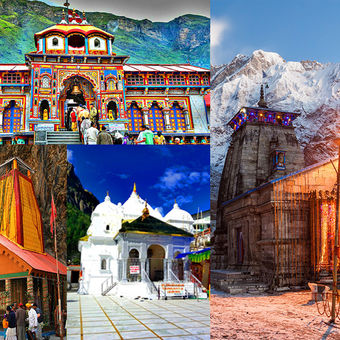
Char Dham yatra from Delhi
Duration : 11 Night / 12 Days


Connect with an expert
for this trip
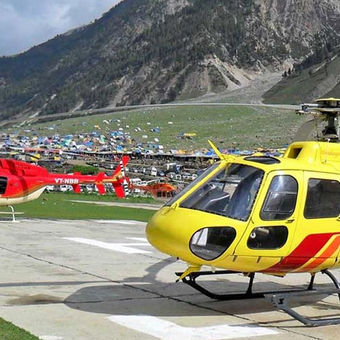
Amarnath yatra 5 Nights by Helicopter
Duration : 5 Night / 6 Days


Connect with an expert
for this trip
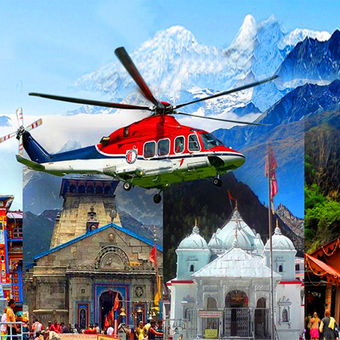
Char Dham yatra by Helicopter
Duration : 2 Night / 3 Days


Connect with an expert
for this trip
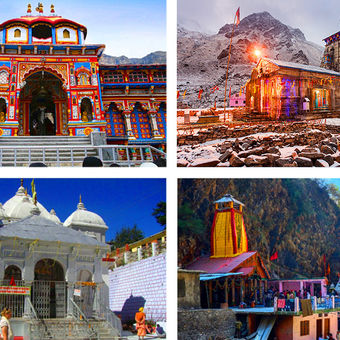
Char Dham yatra via Haridwar
Duration : 9 Night / 10 Days


Connect with an expert
for this trip
Do Dham Yatra Kedarnath and Badrinath from Haridwar
Duration : 5 Night / 6 Days


Connect with an expert
for this trip
Kedarnath Dham yatra from Delhi
Duration : 5 Night / 6 Days


Connect with an expert
for this trip
Kedarnath Dham Yatra from Haridwar
Duration : 3 Night / 4 Days


Connect with an expert
for this trip
Teen Dham Yatra Gangotri Kedarnath and Badrinath from Delhi
Duration : 9 Night / 10 Days


Connect with an expert
for this trip
Teen Dham Yatra from Haridwar
Duration : 7 Night / 8 Days


Connect with an expert
for this trip
Do Dham (Kedarnath and Badrinath) yatra 7 Nights from Delhi
Duration : 7 Night / 8 Days
Connect with an expert
for this trip
Badrinath Dham yatra from Delhi
Duration : 5 Night / 6 Days
Connect with an expert
for this trip
Badrinath Dham yatra from Haridwar
Duration : 3 Night / 4 Days